


Ayurvedic vs Chemical Skincare: Complete Comparison Guide
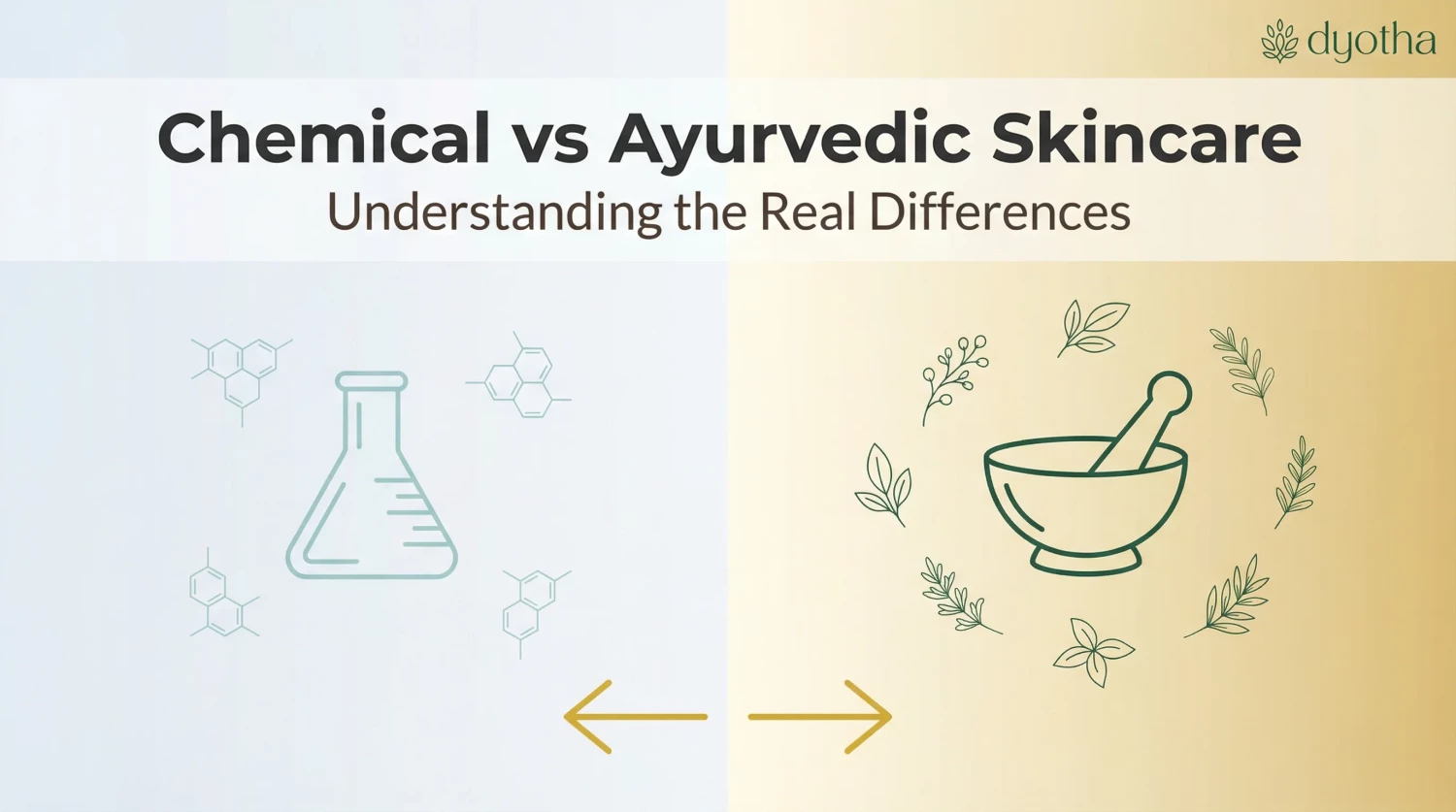
Ayurvedic vs Chemical Skincare: The Complete Comparison
You're standing in the beauty aisle, overwhelmed by choices. One bottle promises instant results with scientific ingredients. Another claims natural, traditional formulations. Which do you choose?
The debate between Ayurvedic and chemical skincare isn't just about preferences—it's about understanding what you're putting on your skin and what results you can realistically expect.
This guide breaks down the real differences so you can make an informed decision.
The Fundamental Difference
Chemical Skincare: The Modern Approach
Chemical skincare uses synthetic compounds, laboratory-created ingredients, and industrial manufacturing processes. These products are designed for quick, visible results by targeting specific skin issues aggressively.
Common chemical ingredients include:
Retinol and retinoids (synthetic vitamin A derivatives)
Alpha hydroxy acids (AHAs) and beta hydroxy acids (BHAs)
Parabens (preservatives)
Synthetic fragrances
Chemical sunscreens (oxybenzone, octinoxate)
Sulfates (cleansing agents)
Ayurvedic Skincare: The Traditional Approach
Ayurvedic skincare follows 5,000-year-old formulations using herbs, oils, and natural ingredients. These products work holistically, addressing root causes rather than just symptoms, and are made by traditional artisans using time-tested methods.
Common Ayurvedic ingredients include:
Turmeric (anti-inflammatory, brightening)
Saffron (skin lightening, anti-aging)
Neem (antibacterial, purifying)
Sandalwood (cooling, soothing)
Manjishta (pigmentation, blood purifier)
Natural oils (sesame, almond, coconut)
Head-to-Head Comparison
1. Speed of Results
Chemical Skincare: Fast results—often within days or weeks. Chemicals force your skin to react quickly, which is why you see rapid changes.
Ayurvedic Skincare: Gradual results—typically 4-12 weeks. Works with your skin's natural renewal cycle rather than forcing immediate changes.
Winner? Depends on your priority. Quick fix vs. sustainable transformation.
2. How They Work
Chemical Skincare: Works against your skin by forcing rapid cell turnover, stripping oils, or suppressing natural processes. Results are often temporary—stop using the product, and issues return.
Ayurvedic Skincare: Works with your skin by nourishing, balancing, and supporting natural functions. Results build over time and often sustain even after you stop using products.
Winner? Ayurvedic for long-term skin health.
3. Side Effects & Sensitivity
Chemical Skincare: Common side effects include redness, peeling, dryness, increased sensitivity, purging periods, and potential irritation. Strong actives can damage your skin barrier over time.
Ayurvedic Skincare: Minimal side effects when using authentic products. Rare reactions usually come from specific herb sensitivities (easily identified). Generally safe for sensitive skin.
Winner? Ayurvedic for safety and gentleness.
4. Ingredient Transparency
Chemical Skincare: Often contains 20-50+ ingredients with complex chemical names. "Fragrance" can hide hundreds of undisclosed chemicals. Difficult for average consumers to understand what they're using.
Ayurvedic Skincare: Typically 3-10 recognizable ingredients. Everything is natural and identifiable—your grandmother would recognize the ingredient list. Complete transparency in authentic products.
Winner? Ayurvedic for transparency.
5. Manufacturing Process
Chemical Skincare: Mass-produced in factories using industrial processes. Focus on shelf life (2-3 years) through synthetic preservatives. Scalable and consistent, but not artisanal.
Ayurvedic Skincare: Small-batch production by traditional artisans. Made using ancient methods (hand-ground, cold-pressed, moon-phase-dependent). Shorter shelf life (6-12 months) due to lack of synthetic preservatives.
Winner? Tie—depends if you value artisan craftsmanship vs. convenience.
6. Environmental Impact
Chemical Skincare: Synthetic ingredients can pollute water systems. Microplastics in formulations harm marine life. Industrial manufacturing has high carbon footprint. Many ingredients are petroleum-derived.
Ayurvedic Skincare: Biodegradable natural ingredients. Sustainable harvesting practices. Traditional methods have minimal environmental impact. Often packaged in recyclable materials.
Winner? Ayurvedic for sustainability.
7. Cost
Chemical Skincare: Wide range—drugstore to luxury. Mass production makes it affordable, but you often need multiple products for a complete routine. Hidden costs from treating side effects.
Ayurvedic Skincare: Generally moderate to premium pricing due to artisan production and quality ingredients. One product often serves multiple purposes. No hidden costs from damage repair.
Winner? Tie—both have affordable and premium options.
8. Long-Term Effects
Chemical Skincare: Can damage skin barrier over time. Creates dependency (skin worsens when you stop). Potential unknown long-term effects from synthetic compounds. Risk of premature aging from over-exfoliation.
Ayurvedic Skincare: Strengthens skin over time. Improves skin's natural resilience and function. No dependency—benefits often continue after stopping. 5,000 years of safe use documented.
Winner? Ayurvedic for long-term health.
Who Should Choose What?
Choose Chemical Skincare If You:
Need fast results for an upcoming event
Have severe acne requiring prescription treatments
Prefer scientific, clinical approaches
Don't mind potential side effects for quick fixes
Have thick, resilient skin that tolerates actives
Choose Ayurvedic Skincare If You:
Want long-term skin health over quick fixes
Have sensitive or reactive skin
Prefer natural, recognizable ingredients
Value traditional wisdom and artisan craftsmanship
Care about environmental sustainability
Want to strengthen your skin barrier naturally
Are tired of chemical product dependency
Can You Use Both?
Yes, but strategically. Some people use chemical products for specific concerns (like prescription retinoids for severe acne) while using Ayurvedic products for daily maintenance and barrier repair.
Best approach if mixing:
Use chemical actives sparingly (2-3x per week max)
Support with Ayurvedic nourishment daily
Let Ayurvedic oils repair damage from chemical treatments
Gradually transition to full Ayurvedic as skin improves
However, you'll see optimal results when committing to one approach fully.
The Dyotha Difference
At Dyotha, we connect you directly with Kerala's traditional Ayurvedic artisans who have been perfecting these formulations for generations. Every product:
Contains only recognizable, natural ingredients
Is made in small batches using traditional methods
Comes from a named artisan with traceable lineage
Contains zero synthetic chemicals or preservatives
Works with your skin, not against it
We're not anti-science—we're pro-wisdom. And 5,000 years of successful use is the longest clinical trial in history.
Your Next Steps
The choice between Ayurvedic and chemical skincare ultimately depends on your goals, skin type, and values. But remember:
Quick results don't always mean better results. Your skin is your largest organ—what you put on it matters not just today, but for decades to come.
If you're ready to experience authentic Ayurvedic skincare made by traditional Kerala artisans, browse our collection. Every product includes complete transparency about ingredients, preparation methods, and the artisan behind it.
Because your skin deserves tradition, not just trends.
Have questions about making the switch to Ayurvedic skincare? Contact us—we're here to help you transition smoothly.
Recent Posts