


Common Ayurvedic Skincare Ingredients Explained | Guide
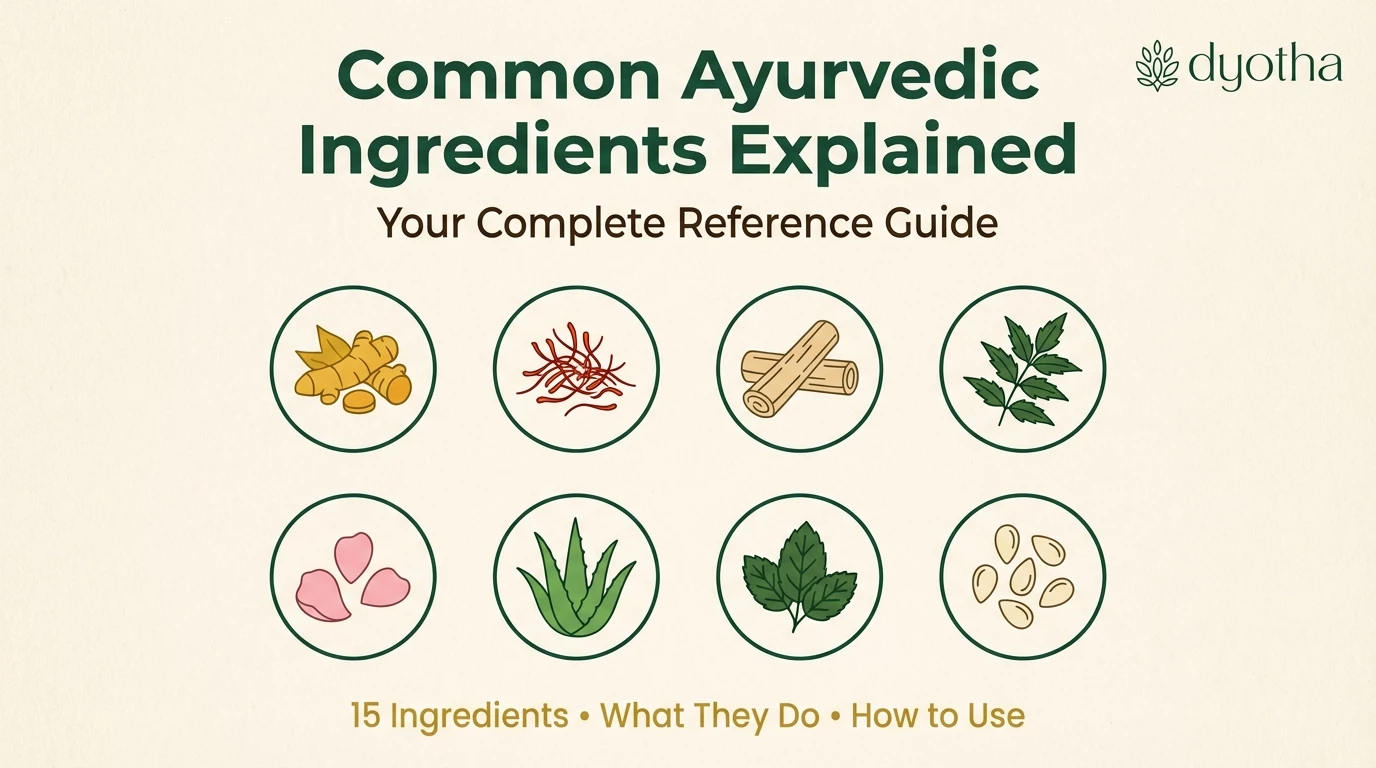
Common Ayurvedic Skincare Ingredients Explained: The Complete Beginner's Guide
Ever looked at an Ayurvedic product ingredient list and felt lost?
Manjishta, Yashtimadhu, Kumkumadi—these aren't typos. They're some of the most powerful skincare ingredients in existence, used for thousands of years.
This guide decodes the most common Ayurvedic ingredients you'll encounter. What they do, how they work, and which skin concerns they address.
Bookmark this page. You'll reference it often.
The 15 Most Common Ayurvedic Skincare Ingredients
1. Turmeric (Haldi)
What it does:
Brightens skin tone
Reduces inflammation
Fades dark spots and hyperpigmentation
Anti-bacterial (fights acne)
Evens complexion
How it works: Contains curcumin, a powerful anti-inflammatory and antioxidant compound that inhibits melanin production.
Best for: All skin types, especially dull or pigmented skin
Warning: Can temporarily stain skin orange (fades in 15-20 minutes)
Found in: Face packs, cleansers, brightening serums
2. Saffron (Kesar/Kumkuma)
What it does:
Brightens and adds radiance
Fades dark spots and scars
Anti-aging properties
Improves skin texture
Natural glow enhancer
How it works: Rich in antioxidants and crocin, which lightens skin naturally and improves circulation.
Best for: All skin types, particularly aging or dull skin
Why it's expensive: Most valuable spice in the world, harvested by hand
Found in: Kumkumadi Tailam, premium face oils, brightening treatments
3. Sandalwood (Chandan)
What it does:
Cools and soothes skin
Reduces inflammation and redness
Calms irritation
Natural antiseptic
Balances oil production
How it works: Contains santalol, which has anti-inflammatory and antimicrobial properties. Naturally cooling.
Best for: Sensitive skin, Pitta skin types, inflamed or red skin
Traditional use: Paste applied to forehead for cooling effect
Found in: Face packs, soothing serums, cooling treatments
4. Neem (Nimba)
What it does:
Powerful antibacterial
Fights acne-causing bacteria
Purifies skin
Controls excess oil
Prevents breakouts
How it works: Contains nimbidin and other compounds with strong antimicrobial properties.
Best for: Oily skin, acne-prone skin, Kapha skin types
Taste/smell: Bitter and strong (that's how you know it's real!)
Found in: Cleansers, acne treatments, purifying face packs
5. Manjishta (Indian Madder)
What it does:
Treats hyperpigmentation
Brightens complexion
Evens skin tone
Reduces blemishes
Improves circulation
How it works: Natural blood purifier that works from within to clear skin.
Best for: Pigmentation, uneven skin tone, acne scars
Traditional use: Internal consumption for skin clarity (consult practitioner)
Found in: Brightening face oils, pigmentation treatments
6. Ashwagandha (Indian Ginseng)
What it does:
Anti-aging powerhouse
Reduces stress-related skin damage
Boosts collagen production
Improves elasticity
Protects against free radicals
How it works: Adaptogen that reduces cortisol (stress hormone) and promotes cell regeneration.
Best for: Aging skin, stressed skin, premature aging
Bonus: Calms mind while healing skin
Found in: Anti-aging serums, face oils, rejuvenating treatments
7. Rose (Gulab)
What it does:
Hydrates and moisturizes
Balances pH
Soothes irritation
Tones skin
Adds natural fragrance
How it works: Natural humectant with anti-inflammatory properties. pH similar to skin.
Best for: All skin types, especially dry or sensitive
Forms: Rose water, rose oil, rose petals
Found in: Toners, hydrating mists, face packs, oils
8. Aloe Vera (Kumari)
What it does:
Deep hydration
Soothes burns and irritation
Healing properties
Anti-inflammatory
Lightweight moisture
How it works: Contains 75+ active compounds including vitamins, minerals, and amino acids.
Best for: All skin types, especially Pitta (sensitive/hot)
Pro tip: Fresh aloe gel is most potent
Found in: Gels, moisturizers, soothing treatments, face packs
9. Tulsi (Holy Basil)
What it does:
Purifies skin
Anti-fungal properties
Treats acne
Reduces inflammation
Protects from environmental damage
How it works: Rich in essential oils with antimicrobial and adaptogenic properties.
Best for: Oily, acne-prone skin, pollution protection
Traditional use: Sacred plant in Ayurveda, used for overall health
Found in: Cleansers, acne treatments, purifying masks
10. Licorice (Yashtimadhu)
What it does:
Natural skin brightener
Fades dark spots
Evens skin tone
Anti-inflammatory
Reduces hyperpigmentation
How it works: Contains glabridin, which inhibits melanin production naturally.
Best for: Pigmentation, dark spots, uneven tone
Note: Not the candy! This is the root extract
Found in: Brightening serums, dark spot treatments, face packs
11. Sesame Oil (Til)
What it does:
Deep moisturization
Natural sun protection (SPF 4-5)
Anti-aging benefits
Strengthens skin barrier
Traditional Ayurvedic base oil
How it works: Rich in vitamin E, sesamol, and fatty acids. Penetrates deeply.
Best for: Dry skin, Vata skin types, mature skin
Traditional use: Full body massage oil (abhyanga)
Found in: Face oils, body oils, massage preparations
12. Almond Oil (Badam)
What it does:
Nourishes deeply
Reduces dark circles
Improves complexion
Softens skin
Gentle enough for sensitive areas
How it works: High in vitamin E and fatty acids. Light texture, absorbs well.
Best for: Dry skin, under-eye care, sensitive skin
Pro tip: Works great for dark circles with consistent use
Found in: Face oils, eye treatments, nourishing creams
13. Coconut Oil (Narikela)
What it does:
Creates protective moisture barrier
Antibacterial properties
Deep hydration
Natural makeup remover
Heals minor damage
How it works: Rich in lauric acid with antimicrobial properties. Occlusive moisturizer.
Best for: Dry skin (can be heavy for oily skin)
Kerala specialty: Abundant in Kerala, used extensively
Found in: Cleansing oils, body moisturizers, hair treatments
14. Multani Mitti (Fuller's Earth)
What it does:
Absorbs excess oil
Deep cleanses pores
Removes impurities
Cooling effect
Tightens skin temporarily
How it works: Clay that absorbs oil and draws out impurities through adsorption.
Best for: Oily skin, Kapha types, hot weather
Warning: Can be drying—don't overuse on dry skin
Found in: Face masks, cleansing treatments
15. Besan (Chickpea Flour)
What it does:
Gentle exfoliation
Removes dead skin
Brightens complexion
Cleanses without stripping
Traditional cleanser
How it works: Natural gentle abrasive that sloughs off dead skin without harsh scrubbing.
Best for: All skin types, traditional cleansing
DIY favorite: Mix with water/milk for instant face wash
Found in: Face packs, cleansers, scrubs
How to Use This Guide
When shopping: Look for these ingredients in the top 5 on the ingredient list. If they're at the end, there's not enough to matter.
When creating DIY: Reference this guide to choose ingredients for your specific concerns.
When comparing products: Use this to understand what you're actually buying and if it matches your needs.
Ingredient Combinations That Work Well
For brightening: Turmeric + Saffron + Manjishta + Licorice
For acne: Neem + Tulsi + Turmeric + Sandalwood
For anti-aging: Saffron + Ashwagandha + Almond Oil + Sesame Oil
For hydration: Rose + Aloe Vera + Almond Oil
For sensitive skin: Sandalwood + Rose + Aloe Vera
Red Flags: When "Ayurvedic" Isn't Really Ayurvedic
Watch out for products that:
List these ingredients at the END of a 30+ ingredient list
Contain mostly synthetic ingredients with 1-2 Ayurvedic ones
Use artificial fragrances to smell like herbs
Have bright artificial colors
List "fragrance" or "parfum"
Real Ayurvedic products: 3-10 ingredients, all recognizable, traditionally combined.
Where to Find Authentic Ayurvedic Products
Look for:
Traditional artisan-made formulations
Short, recognizable ingredient lists
Kerala or traditional Indian sources
Complete transparency
No synthetic additives
Shop authentic Kerala Ayurveda: www.dyotha.com
Questions about any ingredient? Want to know which products contain these? Contact us at www.dyotha.com
Recent Posts